-
When does it make financial sense to transfer my home loan balance to a different bank?
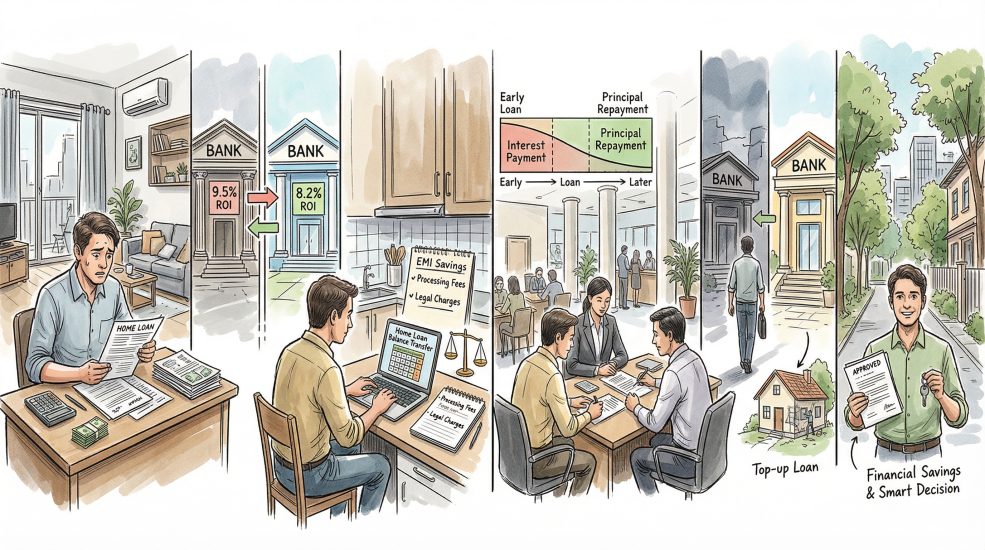
Transferring your home loan balance to a different bank makes financial sense primarily when the long-term savings on interest significantly outweigh the costs associated with switching. Here are the specific situations where a home loan balance transfer is a smart financial move: Substantial Interest Rate Difference: It makes sense when a competing lender offers…
-
Understanding MCLR and RLLR: Which Loan Rate Is Better?

MCLR (Marginal Cost of Funds Based Lending Rate) is an internally linked benchmark where banks determine the minimum lending rate based on their own funding costs,. In contrast, RLLR (Repo Linked Loan Rate), often referred to as EBLR (External Benchmark Lending Rate), is an externally linked benchmark that is directly tied to the Reserve Bank…
-
Avoiding Dormant Account Fees: What You Need to Know
When a bank account sees no customer-initiated activity for an extended period—typically 12 to 24 months—the bank will first classify it as “inactive” and may begin charging monthly inactivity or dormancy fees. These fees usually range from $5 to $25 and can slowly drain, or even completely deplete, smaller account balances. Note that automatic system…
-
Avoid Common Bank Fees: Top Strategies to Save Money
Monthly Maintenance Fees Banks charge these fees to cover the administrative costs of keeping your account open, often ranging from $4 to $25 per month, with an average of around $13.95. Overdraft and Non-Sufficient Funds (NSF) Fees An overdraft fee (averaging around $26.77 to $35) is charged when you do not have enough money in…
-
How to Use the BoB World App for Mobile Banking
The BoB World app by Bank of Baroda (formerly known as M-Connect Plus) is a comprehensive mobile banking platform that integrates over 220 services to provide a “Bank on the Go” experience. Here is a comprehensive guide on how to get started and use the various features of the app: 1. Getting Started and Registration…
-
Steps to Update KYC When Minors Turn 18
The process for updating or performing KYC for a minor depends primarily on their age and when they transition into adulthood. During Minority Re-KYC Upon Turning 18 (Transitioning to a Major) The most critical Re-KYC event for a minor occurs when they turn 18. At this point, their legal status changes, and a mandatory fresh…
-
How can Non-Resident Indians (NRIs) complete their Re-KYC without visiting India?
Non-Resident Indians (NRIs) have several convenient, remote methods to complete their Re-KYC without needing to physically visit a bank branch in India. The available options generally include: Digital and Online Methods: Offline and Postal Methods: To avoid rejection and processing delays, always ensure that your submitted documents are currently valid, clear, and appropriately signed or…
-
WHAT IS KYC?
Know Your Customer (KYC) is a mandatory verification procedure utilized by banks, financial institutions, and other regulated entities to establish and authenticate the identity and address of their customers. This procedure requires customers to undergo verification when opening a new bank account or engaging in various financial transactions. The primary objective of KYC is to…
