Non-Resident Indians (NRIs) have several convenient, remote methods to complete their Re-KYC without needing to physically visit a bank branch in India. The available options generally include:
Digital and Online Methods:
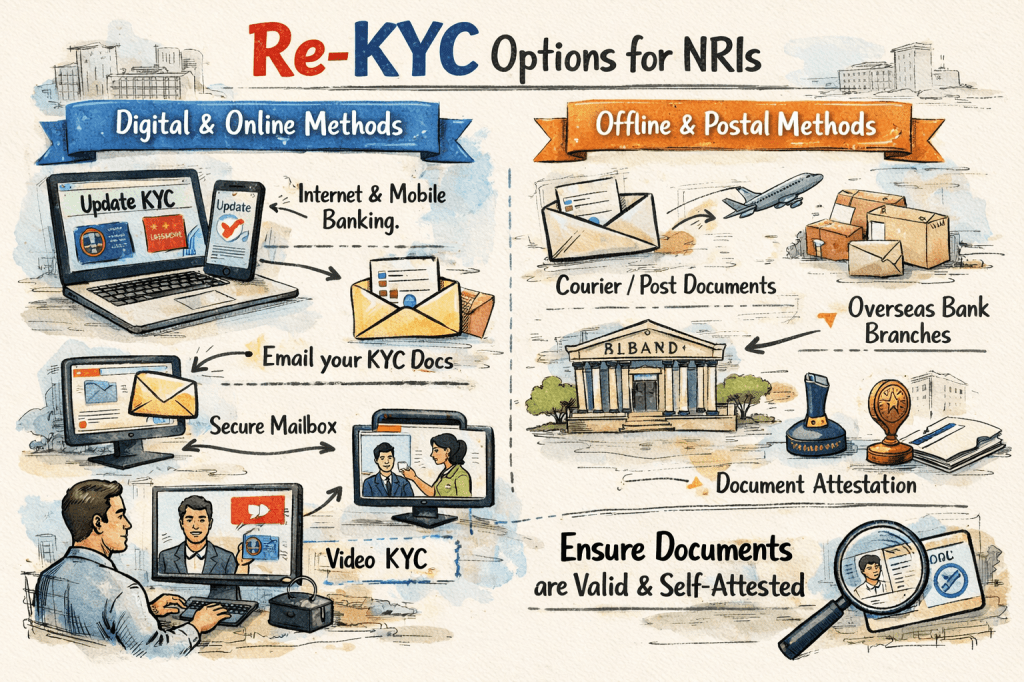
- Internet and Mobile Banking: Many banks allow NRIs to log into their secure online banking portals or mobile applications to update their KYC records. You can check for a “Re-KYC” or “Update KYC” tab, verify your details, and upload scanned, self-attested copies of your documents, such as your passport, visa, and overseas address proof.
- Email Submission: If there are no changes to your demographic details, several banks permit you to email a duly filled Re-KYC form and scanned, self-attested documents directly from your registered email address. Alternatively, you may be able to email these documents directly to your dedicated relationship manager.
- Secure Mailbox Services: Certain banks provide a secure “Mailbox” or messaging feature within their net banking platforms, allowing you to securely submit your scanned KYC documents directly to the bank.
- Video KYC: Some financial institutions offer a real-time Video Customer Identification Process (V-CIP) for Re-KYC. Through a scheduled video call, you can display your original ID proofs, verify your details with a bank official, and provide a live signature.
Offline and Postal Methods:
- Courier or Post: You can download the Re-KYC form, fill it out, and mail it along with your self-attested documents via courier directly to your bank branch in India. This postal process usually takes about 7 to 10 business days.
- Overseas Bank Branches: If your Indian bank operates an approved foreign office or branch in your country of residence, you can submit your Re-KYC forms and documentation there for faster processing.
- Document Attestation: When mailing physical documents from abroad, some banks may require the copies to be formally attested. This certification can typically be done by a Notary Public abroad, an authorized official of an overseas branch of an Indian bank, a Court Magistrate, or the nearest Indian Embassy or Consulate in your country of residence.
To avoid rejection and processing delays, always ensure that your submitted documents are currently valid, clear, and appropriately signed or self-attested before uploading or mailing them.
 financiallearner.com
Leave a comment